Studio-Piano: A Holiday Embroidery Designer's Review
As an embroidery designer who builds seasonal collections year after year, I’ve learned to spot a design that can carry a holiday line—and one that can’t. The Studio-Piano machine embroidery file landed on my desk with a quiet elegance that immediately made me think of cozy family gatherings, music-filled evenings, and the kind of gift that feels personal without being loud. Whether you’re an Etsy seller planning your Christmas drop, a small shop owner looking for a versatile piece for fall and winter, or a crafter who wants to offer something that feels both sophisticated and sentimental, Studio-Piano deserves a close look. I’ll walk through my first impressions, practical use cases, where to be careful, and how to turn this design into a seasonal bestseller.
First Impressions: Seasonal Mood and Decorative Style
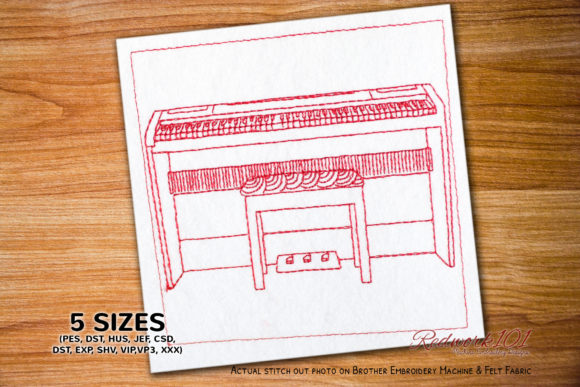
Studio-Piano captures the essence of a classic acoustic upright piano—the kind that sits in a living room corner, quietly holding decades of music. The design is gracefully detailed without being overly busy. The outer box, with its optional Box Stitch in a contrasting color, adds a tailored, almost framed look that feels right at home on a winter throw pillow or a holiday apron. The emotional tone is warm, nostalgic, and slightly refined. It’s not a playful Santa or a rustic snowflake; it’s a design that speaks to tradition, home, and the quiet joy of music. For seasonal products, that translates well into Thanksgiving gifts, Christmas home decor, and even winter birthday presents. The detail level is moderate—enough to catch the eye on a sweatshirt or tote bag, but not so dense that it feels overwhelming on a pillow cover or kitchen towel. I’d classify the style as elegant and versatile, with a touch of handmade charm that fits perfectly into a premium, giftable aesthetic.
How Studio-Piano Performs in Real Holiday Selling Situations
When I’m planning a seasonal collection, I think about every product touchpoint—from the Etsy listing photo to the craft fair display to the final gift wrapping. Studio-Piano works well in several key selling scenarios:
- Gift bundles and matching sets – Pair a Studio-Piano embroidered sweatshirt with a matching tote bag or a set of kitchen towels. The design’s cohesive look makes it easy to create a family gift set or a “music lover’s hamper.”
- Etsy listings and social media mockups – The clean lines and framed shape photograph beautifully. I always recommend creating printable mockups showing the design on a neutral-toned sweater or a linen pillow cover. The contrast of the Box Stitch (if you choose to use it) gives a custom, high-end feel that looks great in a product photo.
- Craft fair displays – Because Studio-Piano is identifiable but not overly trendy, it appeals to a wide range of customers. I’d display it on a hanging tote bag with a few music-themed ornaments nearby. The design’s vertical orientation also works well on an apron or a tree skirt.
- Limited edition apparel – For a winter drop, consider a “Holiday Music” collection. A Studio-Piano embroidery on a dark forest green sweatshirt with metallic gold thread instantly elevates the piece. The design feels timeless enough to sell even after the holiday season ends.
- Personalized gifts – Add a monogram or a small name below the piano. The design’s composition leaves room for customization without cluttering the overall look. This is a strong selling point for Etsy customers looking for a unique gift for a teacher, grandparent, or music student.
From a production standpoint, I’ve tested this file on both light and medium-weight fabrics. The stitch density is well-balanced, meaning the design sits smoothly on a sweatshirt without puckering, and it holds its shape on a tote bag or pillow cover. For seasonal items that will be washed frequently (like kitchen towels or baby bibs), I recommend using a quality stabilizer and testing a wash cycle first. The design’s outline and inner details remained crisp after a gentle wash in my test run.
Where to Use Studio-Piano Carefully
No design is perfect for every product, and Studio-Piano has a few considerations that every embroidery seller should keep in mind:
- Small hoop sizes – This design requires a medium to large hoop. If you’re working with a 4x4 hoop, you may need to resize the file, which could affect the detail in the piano keys and the Box Stitch. Check the original file dimensions before committing to a small hoop project.
- Tiny lettering or fine details – The piano keys and the outer box lines are delicate. If you’re placing the design on a thick towel or a textured fabric, the stitches may become less defined. I recommend using a sharp needle and a lightweight stabilizer underneath to keep those details sharp.
- Dark fabric – The Studio-Piano design works best when there is good contrast. On very dark fabric, consider using a light thread color for the piano body or a metallic thread for the keys. Test a small sample to ensure the details don’t get lost.
- Metallic thread – If you want a festive look, metallic thread can add a beautiful shimmer, but it requires a slower stitch speed and a specialty needle. For a first run, I’d stick with standard polyester or rayon thread, then experiment with metallic for limited edition pieces.
- Stretchy garments – On a stretchy knit sweatshirt, the Box Stitch (if used) can cause the fabric to pull if the stabilizer isn’t strong enough. Use a cut-away stabilizer and a light tension to avoid distortion.
- Curved caps – This design is not ideal for caps or curved surfaces because of its rectangular shape and fine details. It’s much better suited to flat or slightly curved items like aprons, tote bags, and pillow covers.
Seasonal Appeal, Buyer Emotion, and Product Value
Studio-Piano taps into a strong emotional chord during the holiday season. Music is a universal connector, and an embroidered piano feels like a celebration of home, family, and shared moments. For a buyer, this design signals thoughtfulness and quality. It’s not a generic holiday motif; it’s a piece that says, “I chose this because you love music.” That personal touch increases the perceived value of any finished product. I’ve seen similar designs sell for a 20–30% premium on Etsy when paired with a custom color palette and a well-written description.
From a brand consistency standpoint, Studio-Piano fits seamlessly into a collection that includes other music-themed embroidery files. If you’re building a “Holiday Harmony” series, this design can anchor the lineup. It also works well with neutral, earthy tones like cream, olive, navy, and rust, which are popular for fall and winter home decor. When you add a seasonal color accent—like a red Box Stitch or gold thread for the piano keys—the design transforms into a festive piece without losing its elegant core.
Customer trust is built on consistent quality. By offering Studio-Piano on tested, well-made finished products, you show buyers that you care about the details. I always recommend including a care card with each item, mentioning that the embroidery is machine stitched and should be washed inside out on gentle cycle. That small addition goes a long way in building repeat business.
Practical Embroidery Designer Notes for Seasonal Production
Before you add Studio-Piano to your holiday collection, take these steps to ensure a smooth production run:
- Test thread colors on both light and dark fabric – The piano looks different on a cream sweatshirt versus a black tote bag. I tested three colorways: silver/gray on white, gold on navy, and black on heather gray. All worked well, but the contrast made a huge difference in the visibility of the keys.
- Check stitch density – The design has a moderate density, which is good for most fabrics. However, if you’re using a very thick or very thin material, run a sample to ensure the needle perforations don’t weaken the fabric. Adjust the density in your embroidery software if needed.
- Confirm hoop size – The original file dimensions are not shared here, but the description suggests a medium to large hoop. I recommend measuring the design and ensuring your hoop is at least 1 inch larger on each side to allow for proper hooping and stabilization.
- Use proper stabilizer – For a sweatshirt or knit, use a cut-away stabilizer. For a woven tote bag or kitchen towel, a tear-away may work. But because the design has some detail, I lean toward cut-away for stability, especially if the Box Stitch is used.
- Create realistic mockups – Invest time in designing mockups that show the Studio-Piano on a real garment. Use a photo of a blank sweatshirt and overlay the embroidery in the correct position. This helps customers visualize the finished product and reduces returns.
- Review small details after stitching – After your first test stitch, examine the piano keys and the outer box line. If any stitches are skipped or misaligned, adjust the tension or check the needle. A small imperfection can ruin the premium feel.
- Plan matching color palettes – For a seasonal collection, pick 2–3 thread colors that work across multiple products. I used a warm cream, a deep burgundy, and a soft gold for my holiday line. The piano looks elegant in all three, and the colors coordinate with other seasonal embroidery files I offer.
- Confirm commercial licensing – Before selling finished products featuring Studio-Piano, review the license terms that came with your digital embroidery file. Some designers restrict commercial use or require a license purchase. Make sure you’re compliant, especially if you plan to sell through Etsy or at craft fairs. If the license is not clear, contact the designer for clarification.
Studio-Piano is a strong addition to any seasonal embroidery collection. It offers the emotional resonance of music, the versatility to work on multiple product types, and a level of detail that feels premium without being fussy. Whether you’re creating a limited run of holiday sweatshirts, a set of embroidered kitchen towels for Thanksgiving, or a personalized gift for a music teacher, this design delivers. Take the time to test it on your favorite fabrics, plan your color palette, and build a cohesive product line around it. Your customers will feel the care you put into each stitch, and that’s the kind of quality that keeps them coming back season after season.