Empty Swing Design: A Craft Fair Review from an Embroidery Designer
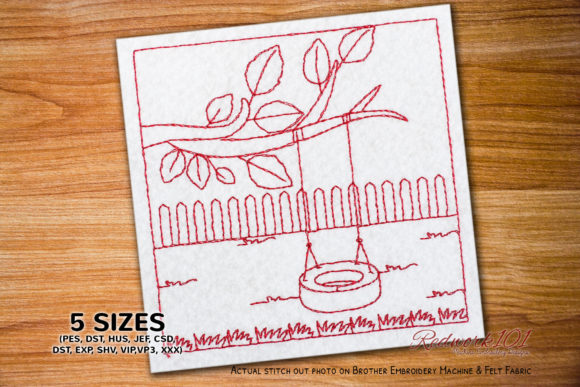
When I first opened the Empty Swing Design embroidery file, I immediately recognized its potential for the handmade market. The concept of an empty swing placed in a garden carries a quiet, nostalgic mood that resonates with customers browsing craft fair booths. It is not loud or trendy in a fleeting sense. It sits in that sweet spot between farmhouse charm and modern minimalist decor. The optional Box Stitch adds a framing element that can elevate the design for different product types, but even without it, the empty swing stands on its own as a strong visual anchor. As someone who has produced hundreds of embroidery products for weekend markets, I want to walk through exactly how this design performs in real-world selling conditions.
First Impression: Mood, Style, and Customer Magnetism
The Empty Swing Design reads as soft, slightly nostalgic, and inviting. It does not scream for attention. Instead, it draws the eye with a gentle pull. That is a powerful quality for a craft fair product because customers often gravitate toward pieces that make them feel something. The empty swing suggests a story: a quiet afternoon, a garden at rest, a moment of pause. This emotional hook is exactly what drives impulse purchases at a booth. The optional outer Box Stitch, described as a different color in most applications, adds structure. Without it, the design feels airy and organic. With it, the design gains a polished, almost framed look that works beautifully on tote bag design and apron embroidery. The Games category label may seem unexpected for a garden swing, but the design's simplicity makes it versatile enough for playful product lines like embroidered game pouches or picnic blankets. The Embroidery execution is straightforward, which is a major advantage for batch production.
Best Product Applications for Craft Fair Success
Based on my experience setting up booth displays, the Empty Swing Design performs best on products where the garden theme and nostalgic mood can shine. Here are the top applications I recommend:
- Tote bags and market bags: The empty swing centered on a canvas tote creates a lifestyle piece that customers picture themselves using at the farmers market. It photographs well for Etsy seller listings and printable mockup presentations.
- Tea towels and kitchen linens: This is where the design truly excels. A linen tea towel with the swing in a soft thread color feels like a gift item people buy for themselves or as hostess presents. The tea towel embroidery market loves narrative designs, and the empty swing tells a gentle story.
- Aprons: A single swing motif on the chest pocket or centered below the bib adds a handmade touch without overwhelming the garment. Apron embroidery sells well at craft fairs because customers appreciate functional art.
- Pillow covers and fabric pouches: The design works as a focal point on a small pillow cover or as a repeating accent on a zipper pouch. For handmade product lines, these smaller items round out the booth and offer lower price points.
- Embroidered patches: The Empty Swing Design translates well into a patch format. Customers can sew it onto jackets, backpacks, or denim. Patches are a low-cost entry point for buyers and a high-margin item for sellers.
- Caps: The design needs careful scaling for curved cap surfaces, but a small swing on the front panel can look charming. Use a lightweight stabilizer to maintain clarity on structured hats.
Production Practicality: Stitch Density, Scaling, and Fabric Behavior
When I evaluate a machine embroidery design for commercial use, I look at stitch density, thread color count, and how the design behaves at different sizes. The Empty Swing Design is generally moderate in density, but I recommend stitching a test sample on your intended fabric before committing to batch production. The swing itself has open areas that indicate the garden background, and those gaps require careful fabric choice. On a dense cotton twill or canvas, the design reads clearly. On a textured tea towel, the open areas may blend into the weave, so check your fabric texture beforehand. The optional Box Stitch adds a border that can help contain the design visually, especially on thick fabric or dark fabric where the swing might otherwise feel disconnected. If you choose to use the Box Stitch in a contrasting color, as the description suggests, test the thread contrast on a scrap piece. A light box on a dark towel or a dark box on a light tote can make the embroidered patch or product pop on the table.
Scaling Considerations for Different Products
One of the strengths of the Empty Swing Design is its scalability, but there are limits. At larger sizes, the swing and garden elements maintain their shape and the open areas remain readable. At smaller sizes, particularly under 3 inches, the fine details of the swing chain or the garden foliage may lose clarity. For small shop product lines like keychains or mini pouches, consider simplifying the design or using a heavier thread weight. Always check your hoop size before loading the file. The design as provided may fit a standard 4x4 or 5x7 hoop, but confirm the exact dimensions in your embroidery file to avoid surprises during production. If you are offering custom sizes, adjust the stitch count proportionally and test for density issues. Dense areas can cause puckering on lightweight fabrics, so use the appropriate stabilizer for each project.
Booth Display and Visual Merchandising
A craft fair booth needs to stop traffic within seconds. The Empty Swing Design works well when displayed on products that allow customers to see the full motif at a glance. I suggest hanging a tea towel or tote bag at eye level so the swing reads clearly from a few feet away. The design's soft, nostalgic mood pairs well with natural wood booth fixtures, linen tablecloths, and neutral wall colors. Avoid cluttering the display with too many competing patterns. Let the empty swing be the hero. If you have multiple products featuring the same design, group them together. A customer who loves the tote bag design will likely also consider the matching apron or pillow cover. This cross-selling strategy works because the design creates a cohesive brand story. For digital embroidery file sellers, creating a printable mockup that shows the design on a lifestyle scene like a garden bench or a farmhouse kitchen helps customers visualize the finished product. That mockup can be your best sales tool for Etsy seller listings or commercial embroidery orders.
Customer Engagement and Buyer Psychology
Customers at craft fairs are often looking for gifts or personal treats that feel meaningful. The Empty Swing Design invites conversation. I have seen shoppers stop at a booth, point to a swing motif, and say, "That reminds me of my grandmother's garden." That emotional connection is gold. When you are selling handmade product lines, the story behind the design matters as much as the stitching. Train your booth staff, or yourself, to mention the garden setting and the optional Box Stitch detail. Explain that the swing is left empty on purpose, allowing the buyer to imagine their own story. This open-ended narrative gives the design a longer shelf life. It does not tie itself to a specific holiday or trend, so you can produce and sell it year-round. For small shop product planning, that means consistent inventory and less seasonal risk.
Embroidery Designer's Practical Notes for Production
Before you sew the Empty Swing Design on your first batch of products, here are the steps I take with every new file:
- Test on scrap fabric: Always run a sample on the exact fabric you plan to use. Check the stitch density and adjust if the fabric puckers or the thread breaks.
- Check thread contrast: The swing and the garden elements should be visible from a distance. If the fabric color is too close to the thread color, the design will disappear. Use a contrasting thread for the Box Stitch if you want it to frame the design effectively.
- Review spacing and placement: For a tote bag design, center the swing about 3 to 4 inches below the top edge. For apron embroidery, place it on the chest or lower front panel. Measure twice, hoop once.
- Confirm hoop size: Open the embroidery file in your software and verify the dimensions. If the design is too large for your hoop, resize it proportionally and check the stitch count. Do not distort the aspect ratio.
- Use the right stabilizer: For cotton and linen, a tear-away stabilizer works well. For stretchy or knit fabrics, use a cut-away stabilizer. For thick fabric like canvas, a medium-weight tear-away is sufficient. For textured towels, a water-soluble topper helps prevent stitches from sinking into the nap.
- Create at least one real mockup: Photograph the finished product on a plain background and on a lifestyle setting. Use this image for your Etsy seller listings, social media, and booth signage. Customers respond to real photos of finished product samples.
- Compare fabric colors: The Empty Swing Design looks best on neutral or pastel fabrics. Dark colors may obscure the open areas of the garden. Test on a light cream, sage green, or soft blue to see the design at its best.
- Confirm commercial licensing: Before you sell any craft fair product featuring this design, verify that your digital embroidery file includes commercial use rights. Most reputable designers allow you to sell the finished products, but always read the license agreement. Keep a copy of your license for your records.
Final Verdict: Is Empty Swing Design Ready for Your Booth?
The Empty Swing Design is a strong addition to any handmade product lineup. It offers emotional appeal, versatile application across multiple product types, and a production profile that is manageable for both home-based crafters and commercial embroidery operations. The optional Box Stitch gives you flexibility to adjust the visual weight depending on the product. For craft fair product planning, I recommend leading with tea towels and tote bags, then expanding into patches and pouches as your customers respond. The design's garden theme aligns with the farmhouse and cottagecore aesthetics that consistently perform well at markets. It also photographs beautifully for printable mockup use, which helps you sell online between shows. As with any machine embroidery design, test thoroughly before production, but I am confident that the empty swing will find its way into many customers' homes. It is a design that feels both finished and open, a balance that is harder to achieve than it looks. That is the mark of a good design asset for your business. Add it to your rotation, and watch it swing.