Squamata Redwork: A Hands-On Designer Review
When I first opened the Squamata Redwork embroidery file, I was curious how a reptile-themed design would translate into redwork style. Redwork relies on clean outlines and restrained stitch work, so the subject matter needs to carry visual weight without heavy fill stitching. After stitching this design on several different products and fabrics, I have a clear picture of where it delivers and where it needs thoughtful handling. This review is for designers, small shop owners, and anyone who needs to know how a design performs before they commit thread and fabric to it.
A Clean First Impression with Strong Visual Personality
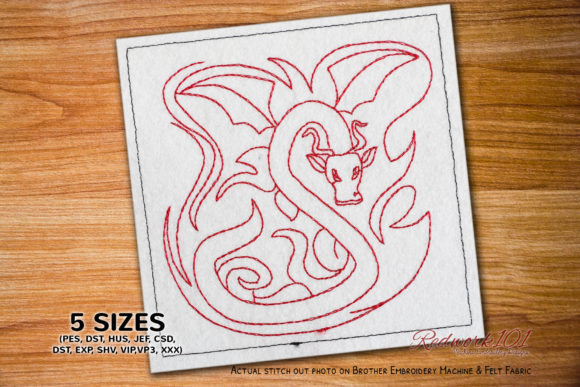
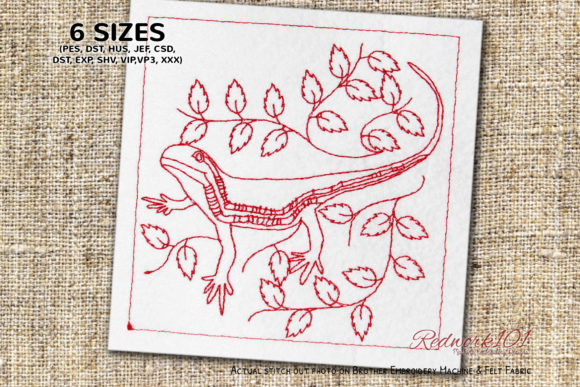
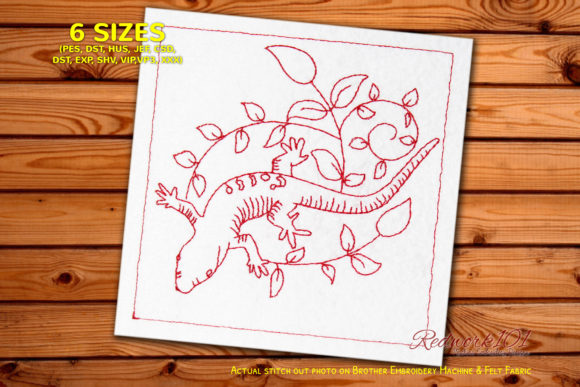
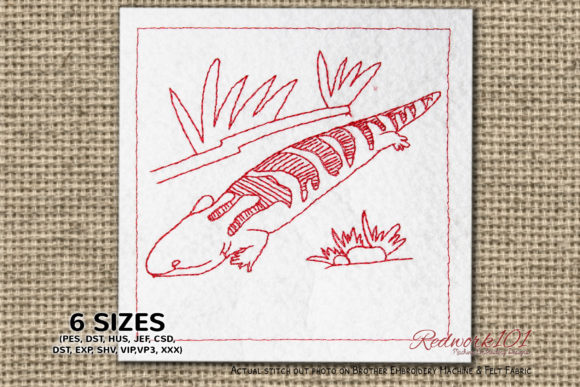
The Squamata Redwork design has a confident, hand-drawn feel that suits redwork style well. The lines are deliberate, the silhouette is readable, and there is a natural sense of movement in the pose. It does not try to overcomplicate itself with excessive detail. That restraint is exactly what makes redwork successful when stitched at typical apparel sizes. The design carries a subtle edge without being aggressive, which means it can appeal to reptile enthusiasts, nature lovers, and even customers looking for something outside the usual floral or monogram embroidery.
The optional box stitch around the outer edge adds a framed look that can help the design feel finished on standalone items like patches or tote bag fronts. Without the box, the design sits more freely and works better on garments where you want the shape to breathe. Having that choice in the embroidery file is a practical advantage when you are designing for multiple product types.
Real Performance on Everyday Embroidery Projects
I tested the Squamata Redwork design on a medium-weight cotton tote bag, a ring-spun cotton sweatshirt, and a linen-blend kitchen towel. These are the kinds of products that small shop owners and Etsy sellers stitch most often, so I wanted to see how the design held up across different fabric textures and weights.
On the tote bag, the design stitched cleanly with no pulled gaps or distortion. The redwork lines remained crisp, and the optional box stitch added a nice border that framed the reptile shape well. This is a strong candidate for a custom tote bag design aimed at reptile lovers or nature-themed boutique merchandise. The stitch density is manageable, and the design does not cause the fabric to pucker when proper stabilizer is used.
On the sweatshirt, I chose to omit the box stitch. The design sat naturally on the left chest area and had enough presence to stand out without overwhelming the garment. Sweatshirt embroidery can be tricky when designs are too dense or have tight corners, but Squamata Redwork handled the knit fabric well. The redwork style reduces the risk of the design feeling stiff or heavy on a soft garment.
On the linen towel, the design stitched cleanly, though I paid extra attention to stabilizer choice. Linen can shift during stitching, and the open areas of the redwork style require the fabric to stay flat. With a medium-weight tear-away stabilizer, the result was a clean, professional-looking embroidered towel that would sell well at craft fairs or in a small shop product line.
Product Types Where Squamata Redwork Excels
After working with this design on several projects, I see it fitting naturally into a few specific product categories. Custom apparel is the most obvious use. T-shirts, sweatshirts, and hoodies with a left chest or center back placement allow the design to speak clearly. The redwork aesthetic has a vintage, hand-stitched quality that many buyers find appealing for casual wear.
Embroidered patches are another strong application. The clean outline of the Squamata Redwork design makes it suitable for patch production, especially if you are creating iron-on or sew-on patches for reptile enthusiasts, nature guides, or outdoor apparel brands. The optional box stitch can serve as a natural border for the patch edge.
Personalized gifts are a natural fit. A custom embroidered pillow cover, a baby blanket with a subtle reptile motif, or a holiday gift for someone who keeps reptiles as pets all benefit from the design's readable shape and restrained stitching. It does not scream for attention, which makes it giftable for a wider audience than a hyper-detailed realistic reptile design might reach.
For small shop merchandise and Etsy listings, the design works well on aprons, kitchen towels, and even cap backs. The redwork style keeps production time reasonable, which matters when you are stitching multiple items for a craft fair or a custom order batch.
Where to Use Caution with This Design
No design is perfect for every situation, and Squamata Redwork has a few areas where I recommend careful planning. The first is small hoop sizes. If you are working with a 4x4 hoop, the design may fit depending on the size you scale it to, but redwork designs with fine lines can lose readability when reduced too much. Always test the scaled version on scrap fabric before committing to a finished product.
Stretchy fabrics require extra attention. The redwork style relies on consistent stitch tension, and knit fabrics like jersey or lightweight interlock can distort the lines if not stabilized properly. I recommend a cut-away stabilizer for stretchy garments and a medium-weight tear-away for stable woven fabrics. Skipping this step can result in wavy lines that ruin the clean look of the design.
Dark fabrics are another consideration. The Squamata Redwork design is shown in a light thread color in the preview, but if you plan to stitch it on black or dark navy, you need to confirm that the thread color you choose provides enough contrast. Redwork traditionally uses red thread, but the design can be stitched in any color. Test your thread against the fabric in natural light before stitching a production run.
Curved surfaces like caps and baby onesies demand careful hooping and placement. The design has a defined shape that can look distorted if the fabric is not hooped smoothly. For caps, use a cap frame and test the design placement on a practice cap first. For baby onesies, the small scale and soft fabric require extra stabilizer to prevent the design from pulling the fabric out of shape.
Practical Designer Notes Before You Stitch
Before you load the Squamata Redwork embroidery file into your machine, take a few steps that will save you time and thread. First, check the stitch density and review the design in your software at actual size. Redwork designs should have balanced stitch lengths that create smooth curves without excessive jumps. If the design has any tight turns or sharp angles in the digitizing, those areas may need adjustment before stitching.
Thread color choice matters more than you might think. The redwork style is defined by its thread color, and the design's personality shifts depending on whether you use a traditional red, a deep forest green, a soft gray, or even a metallic thread. I tested the design in a classic red and in a charcoal gray, and both worked well, but the mood was completely different. Red gave it a vintage, folk-art feel. Gray made it look more modern and restrained. Consider your target customer and the product type before selecting thread colors.
Test the design on scrap fabric that matches your final product's weight and texture. This is the single most important step for any embroidery project, and Squamata Redwork is no exception. A five-minute test stitch can reveal tension issues, stabilizer problems, or design scaling concerns that you cannot see on screen. I test every design in black and white thread first to check the line work before switching to final colors.
Compare the design on light and dark fabric backgrounds before you commit to a production run. Some redwork designs lose their punch on dark fabrics if the thread is not bright enough. If you plan to sell finished products with this design, stitch a sample on each fabric color you intend to offer. Customers notice when the design looks muddy or low-contrast.
Review the licensing terms for the Squamata Redwork design before using it for commercial embroidery or digital product sales. If you are an Etsy seller or small business owner, confirm whether the license covers finished products for sale, digital file resale, or both. Every designer has different licensing terms, and it is your responsibility to know what is allowed. When in doubt, contact the designer directly.
How This Design Affects Product Value and Customer Perception
In my experience, customers respond well to embroidery designs that look intentional and well-executed. The Squamata Redwork design has a clean, deliberate appearance that translates into a professional finished product. When you stitch it neatly on a quality garment or accessory, it elevates the item from a basic blank to something that feels curated and handmade. That perception directly affects how much customers are willing to pay for your finished product.
For small shop owners and Etsy sellers, this design can be a reliable addition to your catalog. It fits into the reptile and nature niche without being overly niche in a way that limits your audience. The redwork style has broad appeal, and the subject matter is distinctive enough to attract attention without alienating customers who might not normally buy reptile-themed products.
Boutique branding is another area where this design can serve you well. If you are creating a line of nature-inspired apparel or accessories, the Squamata Redwork design can be part of a cohesive collection. Its clean lines and consistent stitch style make it easy to pair with other redwork designs for a unified look across your product line.
Final Thoughts on the Finished Product
The Squamata Redwork embroidery design is a solid choice for designers and small business owners who want a reptile-themed project that stitches cleanly, reads well on multiple fabric types, and fits a variety of product categories. It is not a design that tries to do everything, and that focus is exactly what makes it reliable for real use. The optional box stitch adds flexibility, the redwork style keeps production practical, and the subject matter has a natural audience that appreciates the aesthetic.
My advice is to test it on your most common product types, experiment with thread colors, and pay attention to stabilizer and fabric choices. If you take those steps, the Squamata Redwork design will serve you well whether you are stitching a custom tote bag for a client, creating inventory for a craft fair, or building a digital product line for your Etsy shop. It is a design that rewards careful preparation and delivers a finished product that customers will notice and appreciate.