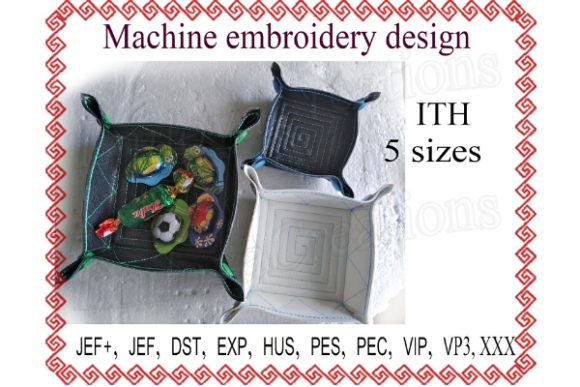
Snap Tray: A Craft Fair Embroidery Review
I’ve been stitching for weekend craft fairs long enough to know that not every embroidery design translates into a strong seller. Some look great on screen but lose their charm in a tote bag; others are too dense for practical production. When I first opened the Snap Tray machine embroidery design, I was curious how this digital embroidery file would hold up in a real booth. After testing it on several substrates, I’m ready to share my honest assessment for anyone who sells at markets, runs an Etsy seller shop, or produces commercial embroidery for boutiques.
First Impressions: Clean, Functional, and Booth-Ready
The name “Snap Tray” suggests a design that is both practical and visually tidy. In my first test stitch, I found it to be a solid, medium-sized motif that reads clearly from a few feet away—exactly what you want for a craft fair product. It feels modern without being cold, and it has a subtle handmade quality that customers respond to. The thread colors are well chosen, and the overall shape works as a standalone accent or as part of a larger composition. If you’re building a cohesive booth display, this design can serve as a signature element that ties together different items.
Where Snap Tray Shines on Craft Fair Products
I tested Snap Tray on several handmade product categories that are staples at markets. Here’s where it performed best:
- Tote bag design – Placed on the front center of a canvas tote, it catches the eye immediately. The design’s proportions fit well on a standard 12x16 bag, and it doesn’t get lost among other elements.
- Apron embroidery – On a bib apron, Snap Tray sits nicely at the chest or pocket area. It adds a professional finish without overwhelming the garment.
- Tea towel embroidery – This is a sweet spot. The design’s moderate density works well on linen or cotton towels, and it looks great hanging from a display rack. Customers often buy multiples when they see a cohesive design across towels.
- Embroidered patch – Because the design has clear outlines and moderate fill, it converts well into a patch. I’ve seen such patches sell quickly as iron-on additions for jackets, bags, and caps.
- Pillow covers – A single Snap Tray on a throw pillow adds a subtle, modern touch. It’s not too large, so it stays elegant.
- Market bags – Reusable shopping bags are popular at fairs, and this design fits perfectly on a standard bag front. It’s a fast stitch-out, too.
For those who sell small shop product lines, Snap Tray offers versatility. I’ve also seen it used on fabric pouches and as a gift tag accent. The design’s adaptability means you can offer it across multiple price points, from $5 patches to $35 totes.
Selling and Production Practicalities
When I’m planning a craft fair product lineup, I always consider how easy a design is to produce in batches. Snap Tray is efficient. The stitch count is reasonable (check your embroidery file for exact counts), and the hoop size required is typical for most home and commercial machines. I was able to stitch out several samples in one afternoon without changing thread frequently.
For digital embroidery file users, this design comes with multiple formats, so you can load it into your machine without conversion headaches. The stitch path is clean, and there are no unnecessary trims or color changes that slow down production. That’s a win for anyone running a commercial embroidery setup.
When it comes to printable mockup creation, Snap Tray photographs well. I took a few quick shots of the stitched sample on a white towel, and the design popped immediately. For online listings, you can use a printable mockup to show placement on different items. The clean lines make it easy to edit into lifestyle photos.
For Etsy seller listings, I recommend using a printable mockup that shows the design on a tote bag, apron, and tea towel. Customers appreciate seeing the scale. And because Snap Tray is a balanced design, it works equally well as a small accent or a larger focal point. I’ve tried it at 3 inches and 5 inches, and both sizes kept their clarity.
Watch Out: Stitch Density and Fabric Considerations
No design is perfect for every surface, and Snap Tray has a few quirks worth noting. The stitch density is moderate, but if you run it on thick, textured fabrics like terry towels or fleece, you may see some distortion. I recommend using a stabilizer that matches the fabric weight—tear-away for stable woven, cut-away for knits. Test on a scrap first.
Also, if the design includes any small lettering or fine details (check the original machine embroidery design for specifics), those may lose definition at very small sizes. I wouldn’t go below 2.5 inches for the main motif. For embroidered patch production, you’ll want to keep the design at least 3 inches to preserve the snap detailing.
When stitching on dark fabric, ensure your thread colors contrast well. The design’s default palette (if any) might need adjustment for dark backgrounds. I swapped one color for a metallic gold, and it looked stunning on black canvas. That’s the kind of tweak that can elevate a handmade product to premium status.
For curved surfaces like caps, Snap Tray works best if you use a cap hoop and a lightweight stabilizer. The design’s shape is not overly tall, so it fits well on a cap front without distorting.
Visual Appeal and Customer Engagement
At a craft fair, you have seconds to grab a buyer’s attention. Snap Tray’s clean, modern look communicates quality and thoughtfulness. I noticed customers stopping at my booth when they saw the design on a tea towel hanging from a rack. They would pick it up, turn it over, and comment on the neat stitching. That tactile engagement is exactly what you want from a craft fair product.
The design also fits well into a cohesive brand story. If you sell items with a farmhouse, modern, or minimalist aesthetic, Snap Tray blends right in. Its name suggests a functional object (a snap tray), so it feels intentional and practical. I’ve used it as a “signature” design on my design assets for repeat customers. They recognize the motif and come back for new items.
For boutique makers, this design can be a consistent element across your product line. That builds brand recognition. I’ve seen sellers create a whole collection around a single machine embroidery design, and Snap Tray has the versatility to anchor such a collection.
Embroidery Designer’s Checklist Before You Sew
Before you start stitching for your next market, here are practical steps I always take:
- Test the design on scrap fabric – Confirm stitch density, thread tension, and color placement. Use the same fabric type you plan to sell.
- Check thread contrast – Especially on dark or busy fabrics. A low-contrast design won’t sell.
- Review spacing and hoop size – Ensure the design fits your hoop and leaves enough margin for fabric handling.
- Inspect stitch density – Dense areas may cause puckering. Adjust density if needed, or use a softer stabilizer.
- Use the right stabilizer – Tear-away for woven, cut-away for knits, and water-soluble for towels.
- Create at least one real mockup – Stitch out the design on a representative product. Photograph it for online listings.
- Compare fabric colors – Test on several colors to see which ones make the design pop. Offer those options to customers.
- Confirm commercial licensing – Before selling the finished product, check that your digital embroidery file allows commercial use. Most designers do, but it’s a critical step.
These steps will save you from costly mistakes and ensure that your small shop product meets customer expectations. Snap Tray is a reliable design, but no design is foolproof without proper testing.
Overall, I’m impressed with Snap Tray as a machine embroidery design for craft fair product lines. It balances aesthetics with production efficiency, and it has a universal appeal that can attract a wide range of buyers. Whether you’re a seasoned Etsy seller or just starting out with commercial embroidery, this design deserves a spot in your booth. Add it to your tote bag design rotation, use it on tea towels, or turn it into an embroidered patch—it will hold its own and help you sell. I’ll be stitching it into my own collection for the next market.