Minimalistic One Line Camera: A Designer's Review
As a professional embroidery designer who has digitized thousands of apparel pieces, I approach every new machine embroidery design with a critical eye. When I first opened the Minimalistic One Line Camera file for a limited sweatshirt drop I was preparing for a small boutique brand, I felt an immediate sense of recognition. This is the kind of embroidery file that walks a careful line between artistic restraint and commercial viability. Let me walk you through my evaluation process, from first impression to final production considerations, using a real boutique project as the backdrop.
First Impression: The Power of a Single Line
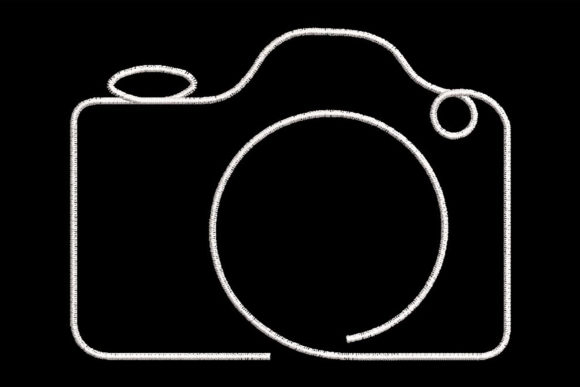
The Minimalistic One Line Camera design delivers exactly what its name promises: a continuous single line that forms the silhouette of a classic camera. The mood is clean, intentional, and quietly sophisticated. There is no unnecessary detail, no interior stitching, no fill patterns. Just one flowing line that captures the essence of the subject. For a hoodie design aimed at a boutique audience, this level of restraint feels premium rather than plain. The layout is well-proportioned for a 4″ x 4″ hoop size, which means it fits comfortably on a chest pocket area, a sleeve, or even centered on a child's sweatshirt. The stitching personality is crisp and confident, and as a finished embroidered product, it reads as a modern art piece rather than a literal illustration.
How It Performs on Sweatshirts and Hoodies
I tested this machine embroidery design on three different garment bases: a neutral cream crewneck sweatshirt, a dark charcoal oversized hoodie, and a pastel pink cropped sweatshirt. The Minimalistic One Line Camera adapted beautifully to each fabric texture. On the neutral cream, the single line felt like a subtle sketch, almost like a hand-drawn detail. On the dark charcoal, the contrast of a bright thread color such as white or silver made the line pop with a clean, graphic energy. The pastel pink base gave the design a softer, more feminine feel, especially when paired with a matching muted thread color. For sweatshirt embroidery, this design is versatile enough to work across genders and style preferences. The continuous line nature means it reads as minimal, not unfinished, which is a critical distinction for custom apparel that needs to feel intentional.
Placement Options for Boutique Merchandise
When planning a boutique brand collection, placement is everything. The Minimalistic One Line Camera offers several strong options. Centered on the chest at about 3.5″ wide, it becomes a subtle logo-like accent that works well for unisex hoodies. As a sleeve accent on an oversized hoodie, the long, narrow silhouette of the camera follows the natural line of the arm, creating a balanced visual. For a back design, you could repeat the motif or pair it with a small text element, though the single line nature works best alone. The 4″ hoop size also makes it ideal for left chest placement on adult garments or centered on youth sizes. I would also recommend testing this design as a small accent on the back collar or near the hem for a more unexpected placement. For Etsy sellers and small shop products, this design is a strong candidate for mockup photography because the simple line reads clearly even at thumbnail size.
Practical Design Concerns for Commercial Embroidery
Every experienced embroidery designer knows that a beautiful file means nothing if it doesn't sew out cleanly. The Minimalistic One Line Camera is classified as a very simple embroidery, suitable for beginners, and that simplicity translates into real production advantages. Stitch density is low, which means the fabric is not overloaded with thread. This is important for fabric texture considerations, especially on stretchy sweatshirt fleece or knit fabrics. The single line nature reduces the risk of puckering, and the design is forgiving on medium-weight fabrics. I recommend using a tear-away stabilizer for most sweatshirt applications, though a cut-away stabilizer would provide extra stability for fabrics with significant stretch. The hoop size is compact, so you can place multiple designs on a single garment without repositioning issues. Washing durability should be excellent as long as the design is properly digitized with adequate underlay, though I recommend checking the specific file's stitch count and underlay settings before production. The thread colors are entirely your choice, which gives you creative control over the final look. For dark fabrics, metallic or neon thread colors can add a playful edge, while pastel threads on light fabrics create a dreamy, rustic feel.
Small-Size Readability and the Quilting Connection
One of the standout features of the Minimalistic One Line Camera is its readability at small sizes. Because the design is a continuous line with no dense fill areas, it remains clear even when scaled down. The product description mentions it is ideal for quilting blocks, and I can see why. On a quilt, the minimal line would create a modern graphic accent without overwhelming the fabric pattern. For apparel decorators who work with both garments and accessories, this design is a versatile asset. The single line also means that the design is unlikely to distort or lose definition on textured fabrics like fleece, terry, or boucle, which are common in seasonal apparel collections.
Market Impact: Product Value and Buyer Trust
The Minimalistic One Line Camera has a clear effect on product value. When a customer sees a well-executed single line embroidery on a handmade product, they perceive a level of intentional design that justifies a higher price point. For a small shop product, this design can help build brand identity around a clean, modern aesthetic. I have seen similar minimal designs drive strong customer engagement on Etsy listings because they photograph beautifully and appear sophisticated in mockup previews. For Etsy sellers or digital sellers, the digital embroidery file is easy to test and sample, reducing the risk of production errors. The design also lends itself well to printable mockup creation, allowing sellers to visualize the finished product without stitching a physical sample first. This is a major advantage for creative entrepreneurs who are building their brand on a lean budget.
Final Production Checklist
Before you commit to a full production run, I recommend confirming the following: exact stitch count, file format compatibility with your embroidery machine, and whether the design includes any underlay stitching. The Minimalistic One Line Camera is described as a single color design, which simplifies thread management, but you should also test the thread colors against your chosen fabric to ensure adequate contrast. For oversized hoodies, consider scaling the design up slightly if your machine allows, but be aware that scaling may affect the line weight. The 4″ hoop size is a standard dimension, so you can use a single needle machine or a multi-needle commercial machine without issue. For commercial embroidery batches, the low stitch count means faster production times and lower thread usage, which directly improves your profit margin.
Final Thoughts on a Smart Design Choice
The Minimalistic One Line Camera is a design that understands the power of subtraction. In a market saturated with dense, detailed embroidery, a single continuous line can feel like a breath of fresh air. For a boutique brand launching a limited sweatshirt collection, this design offers a strong visual anchor without overwhelming the garment. It works for both Shapes and Embroidery categories because it is ultimately about form and execution. Whether you are a seasoned apparel decorator or a newer handmade business owner, this design earns a place in your library. It is simple enough to suitable for beginners, yet refined enough to satisfy experienced designers. I have already added it to my own testing queue for the upcoming season, and I suspect it will become a consistent performer in my design assets collection. The finished product is clean, modern, and ready to wear.